
Diamond: One Company to Rule Them All
Welcome to the Macroverse Dispatch Episode 9!
For 25 years, one company decided which comics reached your local shop. It’s now completely belly-up.
Diamond Distributors
In June 2020, in the middle of a pandemic, DC Comics announced it was ending its distribution relationship with Diamond Comic Distributors, the company that had held a near-monopoly on American comics distribution for over two decades. It was the most significant structural change in comics publishing since the 1990s speculator crash, but most readers probably didn't notice it happening at all.
Distribution is the unglamorous plumbing of publishing. It doesn't make headlines, and it doesn't get documented in comics histories (until things go wrong…). But it determines, in an entirely practical sense, which comics reach which shops, when, and on what terms. And, for a long time in American comics, that determination was made by one company operating with essentially no competition.
This is about how that happened, why it persisted, and what its collapse means for the industry you care about.
The Company That Controlled Comics
How a monopoly gets built. Diamond Comic Distributors was founded by Steve Geppi in 1982, in Hunt Valley, Maryland. It was not the only comics distributor at the time - far from it. In the early 1980s, the direct market (comic shops, as opposed to newsagents and supermarkets) was served by a loose network of regional distributors. Capital City, Heroes World, Bud Plant, New Media etc… the market was fragmented, competitive, and functional.
Then the speculator bubble of the early 1990s happened. Collectors bought multiple copies of hot issues, and publishers flooded the market with variant covers and gimmick editions, which resulted in a brief boom. When the crash came in the mid-1990s, however, the fragmented distributor network couldn't absorb it. One by one, smaller distributors closed, with Diamond acquiring several of them, creating a virtual monopoly.
Marvel, attempting to control its own destiny, acquired Heroes World and made it an exclusive Marvel distributor in 1995. The remaining publishers, now without Heroes World as an option, consolidated around Diamond. When the Heroes World experiment failed and Marvel returned to the open market in 1997, Diamond was the only game left.
The DOJ looks, shrugs, and walks away. The Department of Justice launched an antitrust investigation into Diamond's distribution monopoly in 1997. Three years later, it closed the investigation. The reasoning was, charitably, creative: Diamond had a monopoly on comics distribution, the DOJ agreed, but it didn't have a monopoly on books distribution. Since nobody was claiming it did, this was a notably unhelpful conclusion that changed nothing and left the monopoly intact. (It’s amusing that, 26 years later, the DOJ is drawing a similar inference from the YouTube vs regular TV debate as it relates to Paramount’s acquisition of Warner bros).
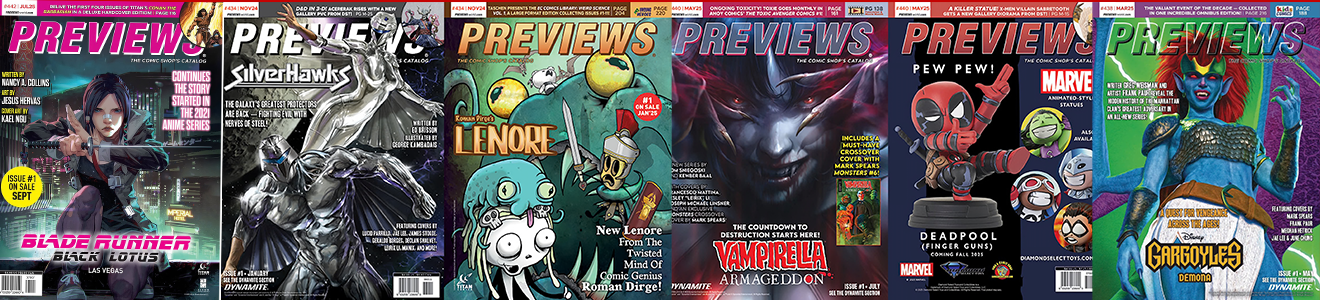
For the next two decades, Diamond was the infrastructure of American comics. Every publisher, from Marvel to the smallest independent, shipped through them, and every comic shop in North America ordered through them. The company's Previews catalogue - the monthly bible of upcoming releases - was the primary interface between publishers and retailers. If you wanted your comic in shops, you submitted to Previews. If Diamond decided your book didn't meet its minimum order thresholds, you didn't get in, end of story. No appeal. No alternative. Just “tough titties to you, fish face”, as Michael Palin once said…
What this meant in practice. For large publishers, Diamond was a mild inconvenience: terms could be negotiated, logistics could be managed, the relationship worked. For small and independent publishers, however, Diamond was a gatekeeper with enormous power and limited accountability. Retailers also complained about having to work with Diamond, but had no other option if they wanted to carry anything at all in their inventory.
The terms weren't designed to favour publishers. Diamond took its cut, paid on lengthy cycles, and - as would become devastatingly apparent later - held significant amounts of publisher money at any given time. Small publishers, in particular, were structurally dependent on payments that Diamond controlled entirely, and the turnaround times on these were brutal.
The pandemic breaks it. When the COVID-19 pandemic lockdowns began, Diamond shuttered their services, shipping no comics between April 1 and May 20, 2020. Six weeks of no new comics reaching shops. For an industry that operates on weekly release cycles, this was not a brief inconvenience… it was an existential crisis.
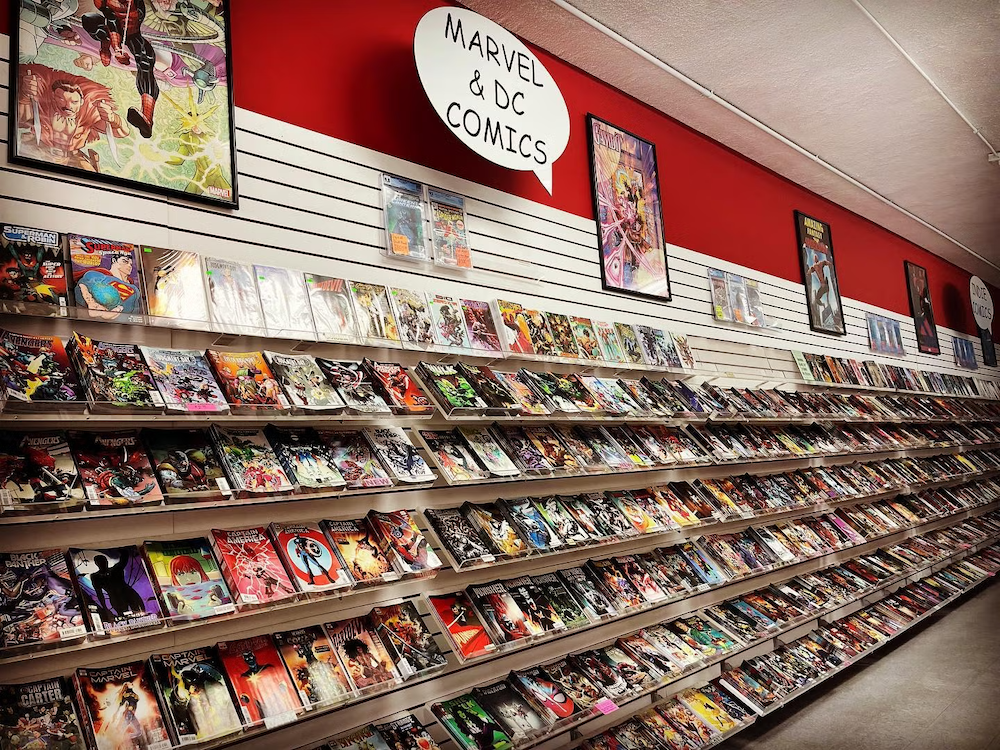
DC, already chafing under the monopoly arrangement and with the resources to act, moved immediately. In June 2020, it announced an exclusive deal with Lunar Distribution and UCS, bypassing Diamond entirely. They were the first to cut ties, and by doing so set off a chain reaction that would ultimately lead to Diamond losing 84% of its comics periodical business by 2023.
Marvel followed in 2021, moving exclusively to Penguin Random House Publisher Services. Image followed DC to Lunar, and the dominoes fell steadily. By the time Diamond filed for Chapter 11 bankruptcy in January 2025, it had already lost the publishers that defined it.
The bankruptcy and its aftermath.
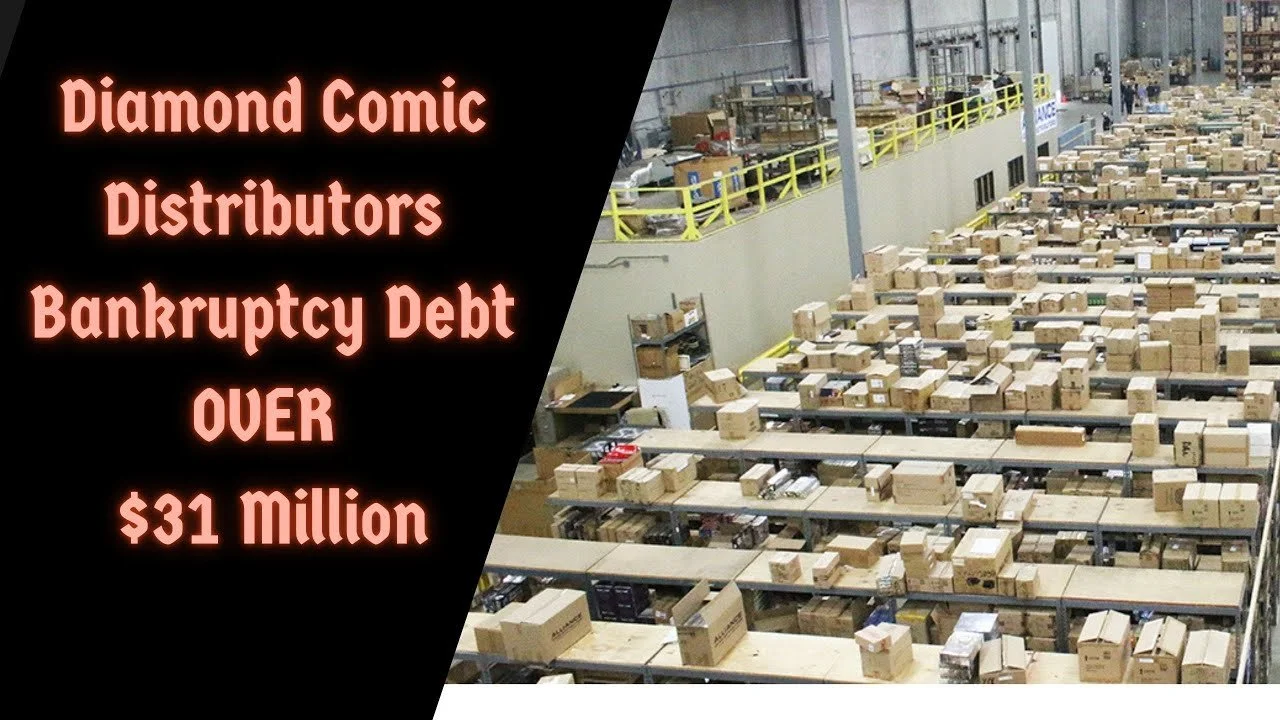
The bankruptcy filing, announced on January 14, 2025, was a direct result of the splintering that occurred when Diamond temporarily shut down operations during the early days of the pandemic. The filing revealed a company that owed tens of millions to publishers, creditors, and employees including, according to court filings, significant sums to nearly 130 publishers who had trusted it with their distribution.
The Chapter 11 proceedings collapsed into Chapter 7 liquidation by December 2025, after JPMorgan Chase declined to fund continued operations, ending founder Steve Geppi's ownership with no equity recovery and leaving consignment disputes for a chapter 7 trustee to resolve.
For DC and Marvel, this was a manageable footnote. They had new distribution arrangements and parent companies with deep pockets. For small publishers, however, it was catastrophic: operating on small margins and tight turnarounds means that having inventory and money tied up in a Diamond warehouse for a year plus was devastating (and we speak from experience here, having 3 issues of a book we were involved with tied up in this mess). The legal details are still being hammered out, but most will probably never see what they are owed.
What comes next. The post-Diamond landscape is messier and probably healthier. Three distributors now handle the major publishers: Lunar for DC and Image, Penguin Random House for Marvel and Dark Horse, and a handful of smaller operations for independents. Competition exists for the first time in a generation, and retailers have options.
The transition has also accelerated conversations about digital distribution that were already overdue. Platforms that allow publishers to sell directly to readers - including, in the spirit of transparency, what we're building at Macroverse - represent a structural alternative to the shop-and-distributor model that has defined American comics since the 1970s. The Diamond monopoly was built on a specific physical distribution model. That model's obsolescence creates space for something different.
The 130 publishers who are still waiting for their money don't find that consolation particularly useful right now. The industry that emerges from Diamond's collapse will, eventually, be better structured. The transition will cost some of the people who can least afford it.
From Our Vaults
Until next week
KBO
Adam
You can also sign up for The Macroverse Dispatch to get articles like these sent straight to your inbox. If that sounds good, then please register below.