
The European Comics Non-Invasion
Welcome to the Macroverse Dispatch Episode 8!
Ridley Scott, George Lucas, and Hayao Miyazaki were all inspired by the same French comic. You've probably never read it.
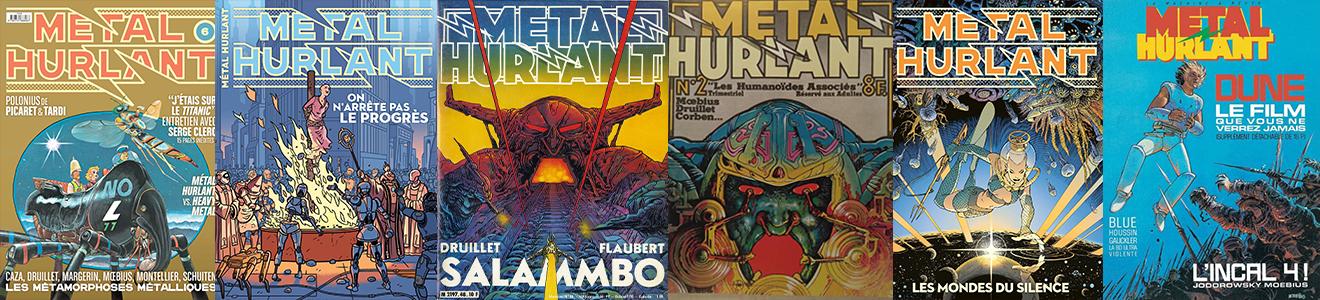
Metal Hurlant
At 4am on December 19, 1974, four people in Paris formed a publishing company. The founding was later described in the first issue of their magazine as follows: "Under the mad marksman's eye of the archer in the sky, on the feast of Bishop Nicasius, who prophesied the arrival of the barbarians who beheaded him, observed by who-knows-how-many orbiting whatnots, a linkless foursome previously identified as Druillet, Dionnet, Moebius, and Farkas were transformed into the Associated Humanoids."
The magazine they launched was called Métal Hurlant - Screaming Metal. It ran from 1975 to 1987. A list of artists and filmmakers it directly influenced includes Ridley Scott, George Lucas, Luc Besson, William Gibson, and Hayao Miyazaki. The DNA of Blade Runner, Alien, Akira, and Neuromancer runs through its pages.
If you're American, there's a reasonable chance you've never read it. That is a gap worth closing.
The Comics Europe Forgot to Tell You About
The bande dessinée - literally "drawn strip," the French and Belgian tradition of comics - has always operated on different assumptions to the American one.
Where American comics were built around characters owned by publishers and recycled indefinitely, bande dessinée was built around the album - a complete, standalone, usually hardcover book, sold in newsagents and bookshops alongside literature. Where American comics spent decades apologising for existing as a medium, French and Belgian publishers marketed albums openly to adults, stocked them in serious bookshops, and treated their best practitioners with the reverence other cultures reserve for novelists or filmmakers. The "ninth art" is a French designation, and it was meant sincerely.
This produced a different kind of work. Longer-form. More visually ambitious. Uninterested in the work-for-hire model. Often deeply weird.
The Tintin problem. Most English-speaking readers' entry point to European comics is Hergé's Tintin - clear-line art, globe-trotting adventure, a reporter with a dog who never ages. It's wonderful, and it's also a fairly misleading introduction to what bande dessinée can do. Tintin is mainstream European comics at its most accessible. What the tradition produces at its most ambitious is considerably stranger.
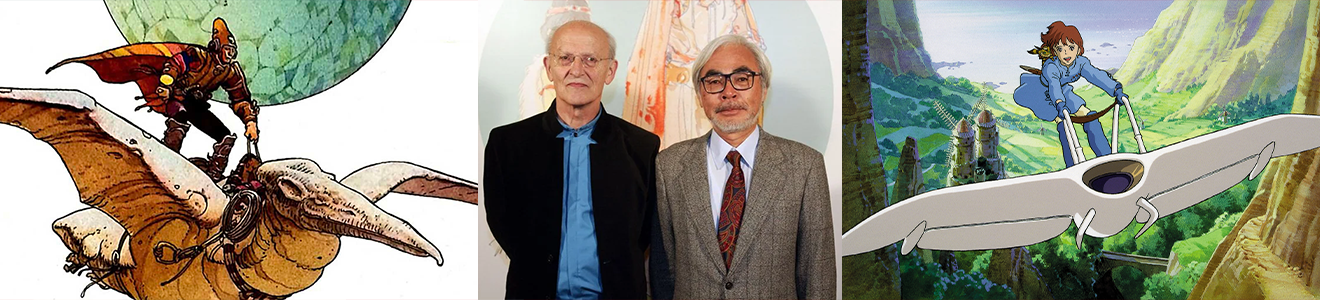
Moebius: the artist who changed everything. Jean Giraud drew Western comics under his own name - a long, acclaimed run on Blueberry with writer Jean-Michel Charlier. Under his alias Moebius, he became something else entirely: one of the most influential visual artists of the 20th century, in any medium.
His Arzach (1975) - a wordless story of a pterodactyl rider traversing alien landscapes - demonstrated that comics could work entirely without dialogue, operating purely as sequential visual experience. His later collaboration with filmmaker Alejandro Jodorowsky on The Incal (1980-88) produced one of the most ambitious science fiction comics ever published: a cosmic, metaphysical odyssey involving a small-time detective, a divine light, and the fate of the universe. Jodorowsky's influence on filmmakers is well documented; less documented is that he couldn't have made most of his ambitious, genre-busting work without Moebius drawing it into existence.
When Moebius met Miyazaki in 2004, the two sat and talked for hours. Miyazaki later described finding, in Moebius's work, a kindred spirit - someone who understood that drawn images could carry weight that live-action cinema couldn't. The influence is especially visible in Nausicaä (one of my favourite films and, interestingly, Moebius’ daughter’s name), but can be seen throughout Studio Ghibli's visual language.
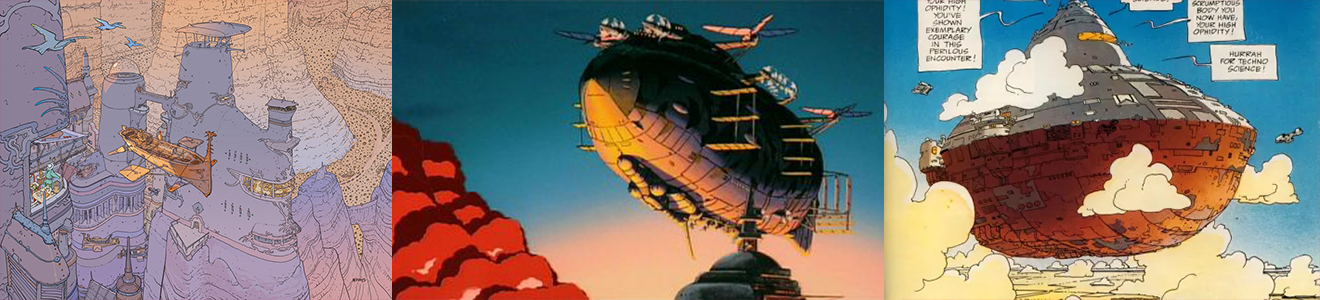
Métal Hurlant and the science fiction explosion.
The magazine Moebius co-founded in 1974 was something the comics world hadn't seen before. Printed on quality stock (while American comics were still on cheap newsprint), featuring lavish painted artwork alongside black-and-white strips, and completely free from the editorial constraints that governed mainstream publishing, Métal Hurlant gave its contributors permission to do whatever they wanted.
Moebius, Druillet, Enki Bilal, Jacques Tardi, Alejandro Jodorowsky, Hugo Pratt and many others either made their name, consolidated their reputation, or wholly reinvented themselves within its pages. H.R. Giger - the Swiss artist whose biomechanical nightmares defined the visual language of Alien - contributed to the magazine. Richard Corben, the American underground artist, published there. The eclectic, cinematic, philosophically strange aesthetic that readers associate with Heavy Metal magazine (the American licensed version, launched in 1977) comes directly from Métal Hurlant, though the American edition quickly drifted toward cheesecake and lost much of the original's intellectual ambition. Dionnet, one of the founders, later described his reaction to Heavy Metal with characteristically French directness: it had "plummeted towards a drooling aesthetic, falsely poetic and truly cheesy." (and, when a Frenchman uses cheese in a derogatory way, you know things are serious…).
Read through the back issues of the magazine and you'll see that science fiction cinema owes a debt to this magazine that it has largely failed to acknowledge.
The Belgian contribution.
While the French were building Métal Hurlant, Belgium was running its own parallel tradition - quieter, more formally experimental, equally extraordinary.
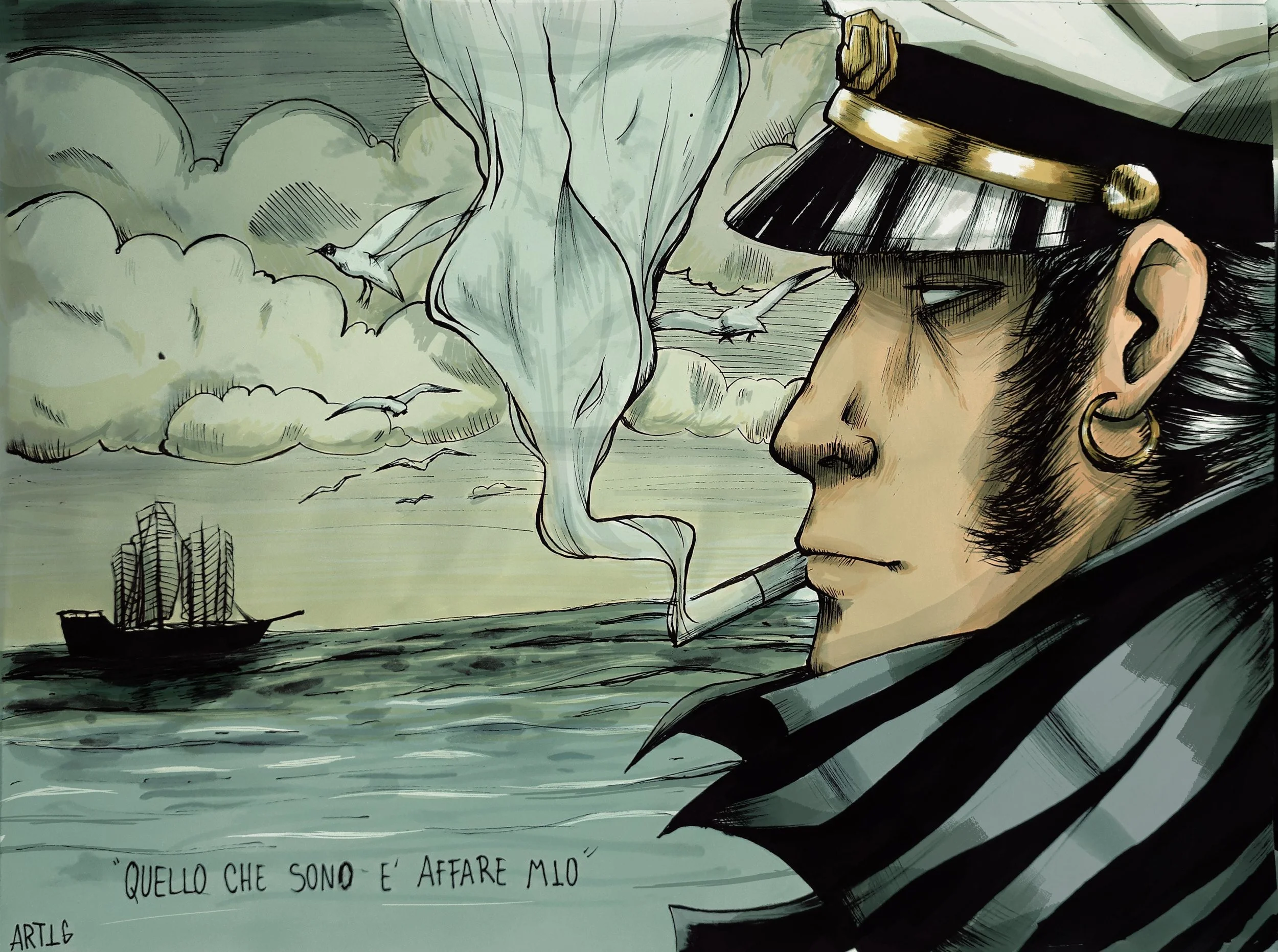
Hugo Pratt's Corto Maltese (1967) - a wandering, morally ambiguous sailor navigating the early 20th century's wars and revolutions - demonstrated that a comics protagonist could be an adult in the full sense, shaped by history, capable of genuine moral complexity, and frankly more interesting than most of the characters in literary fiction of the same period. Pratt drew on Conrad, Kipling, and Melville. He travelled extensively for research. The results are unlike anything published in America at the time.
I’ve pulled a panel below that just screams Mellville to me… you can almost hear the character saying “My name is Ishmeal”.
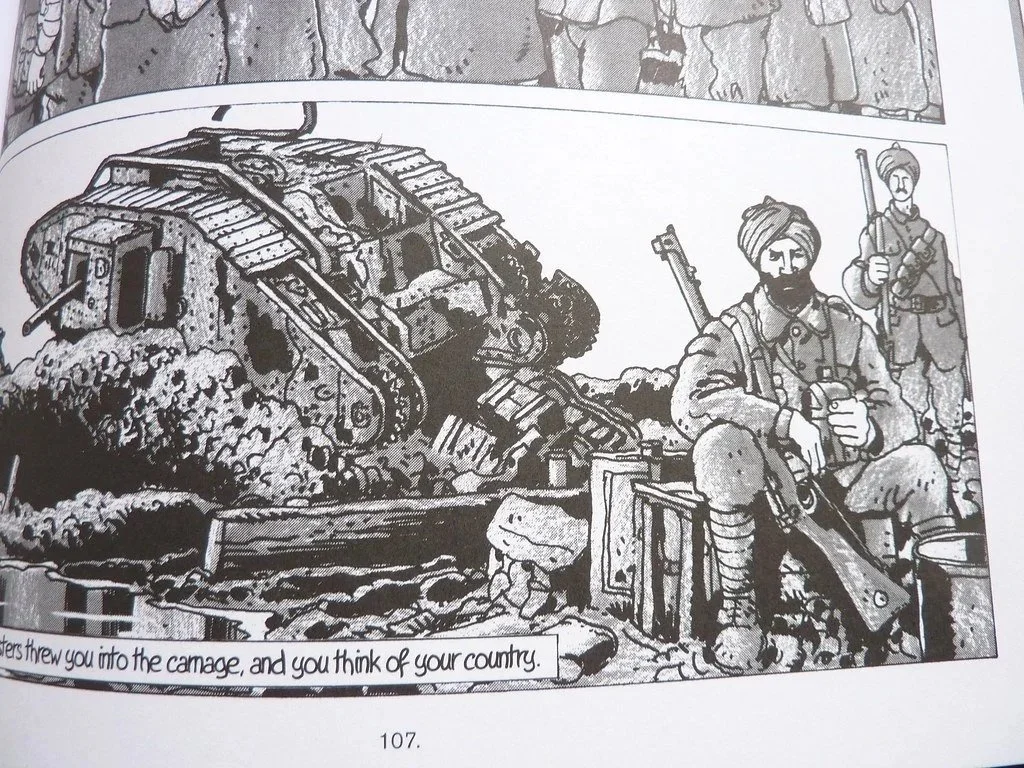
Jacques Tardi has spent decades writing and drawing about the First World War, about working-class Paris, about the machinery of violence and the people it crushes. His It Was the War of the Trenches (1993) is one of the most devastating war comics ever published. It is also profoundly funny in the blackest possible way.
The Pilote lineage.
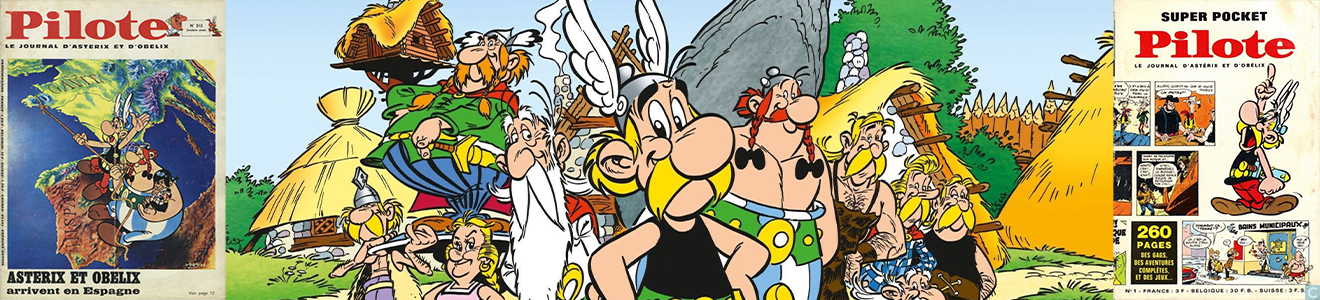
Before Métal Hurlant, the key magazine was Pilote - launched in 1959, home to Goscinny and Uderzo's Asterix (yes, that one…which I might have learned to read on) but also to increasingly ambitious adult work as the 1960s progressed. Pilote was where Moebius developed his line work. It was where Blueberry ran. It's where Gosciny's sophisticated wordplay - which relies on French puns that translation often can't survive - demonstrated what comics writing could do in a language that took it seriously.
What this means for English-language readers. The good news is that an increasing amount of this material is now available in translation. Les Humanoïdes Associés - the company Moebius and his collaborators founded - has been publishing English editions for years. The Incal is in print. Arzach is in print. Corto Maltese is in print. Bilal's extraordinary Nikopol Trilogy - set in a 2023 Paris occupied by Egyptian gods - is in print.
The less good news is that most English-language comics coverage still treats European work as an exotic curiosity rather than a parallel tradition of equal standing. There are French and Belgian comics being made right now that are more formally ambitious than anything currently published by Marvel or DC. They just require slightly more effort to find.
We'll help with that. More European recommendations incoming over the coming issues.
From Our Vaults
Until next week
KBO
Adam
You can also sign up for The Macroverse Dispatch to get articles like these sent straight to your inbox. If that sounds good, then please register below.